

By matching glass thickness to Australian standards, room use, and glass type, you prevent safety risks, structural failures, and acoustic issues. A correctly specified glass partition thickness isn’t just about looking sleek—it’s about safety, longevity, comfort and complying with standards. If the thickness is too thin, you risk cracks, safety hazards, poor acoustic performance, and higher long‑term replacement costs. On the other hand, too much thickness can add weight, price, and make installations tricky. Understanding how thickness works, the rules that apply, and how your design needs interact can help you avoid long-term issues before they arise. This article explores the significance of glass partition thickness, the applicable standards in Australia, and how to select the optimal thickness for your space.
What are glass partition walls, and how are they used?
Glass partition walls are internal, non-load-bearing barriers that divide space while maintaining visibility and light, commonly used in offices for separation without enclosure. Glass partition walls are internal dividers that use glass panels to separate spaces without fully blocking light or sight. Some common uses:
- Separating team workspaces to maintain openness
- creating private meeting rooms while retaining visual connectivity
- dividing reception areas or walk‑in spaces for aesthetics and flow
- framing display zones or feature walls inside offices
They vary in how they’re supported (framed vs frameless), whether they are full height, and whether they include glazing treatments (frosting, tinting, etc.). Each of these uses influences what thickness is needed.
In many layouts, glass partitions are preferred because they allow for the preservation of light and openness. However, not all glass performs the same. Knowing the types of glass used for office partition walls helps ensure your material suits both design and structural demands.
What Australian standards guide the thickness of glass partitions?
Glass partition thickness is governed by AS 1288:2021 and the National Construction Code, which sets minimum safety, impact, and installation requirements. Several rules and standards in Australia set minimums or guidance for glass partitions to ensure long‑term safety and performance. Key ones include:
- AS 1288:2021 – Glass in Buildings (Selection & Installation): This standard replaces the older 2006 version and sets out how to choose glass type and thickness.
- National Construction Code (NCC) – Part 8: Glazing / Housing Provisions: The NCC requires glazing used in buildings to comply with provisions covering size, support, glazing type, and minimum thickness depending on application.
- Human impact glazing provisions (in NCC Part 8.4): Glass in panels where people may walk into or near them must meet safety glazing standards with minimum thicknesses specified.
Many commercial projects rely on guidance on glazing provisions under Australia’s National Construction Code to determine how to balance compliance, risk and design intent. This ensures your partitions meet legal and performance standards from the outset.
Which types of glass require different partition thicknesses?
Different glass types like annealed, toughened, and laminated require varied thicknesses based on their strength, use case, and safety rating. Different glass types behave differently, so the thickness needs vary depending on which is used. Main glass types and how thickness matters:
| Glass Type | Characteristics | Typical Minimum Thickness / Use Cases |
| Annealed (ordinary) | Least strong, breaks into sharp, large shards | 5–6 mm for low-risk framed panels |
| Toughened (tempered) | Stronger, breaks into small granules | 6–10 mm+ for exposed, high-traffic areas |
| Laminated safety glass | Holds together when shattered; blocks sound | 8–12 mm or more for safety + acoustic privacy |
| Framed vs frameless | Frameless needs thicker glass | Frameless doors often start at 10 mm |
As an example, full-height partitions near doors might use 10 mm toughened glass, while a framed meeting room wall may suffice with 6.5 mm laminated panels. If your office is planning changes, adding a glass meeting room to office layouts can help partition selection, shape, function and feel.
How does room design and purpose influence glass thickness?
Glass thickness depends on the space’s use, the size of the panels, and exposure to traffic or noise, which all affect the strength and performance needs. Room use and design requirements strongly affect how thick your glass should be. Consider:
- Traffic levels: High-traffic areas need thicker, tougher glass.
- Panel dimensions: Wider or taller panels flex more.
- Full vs partial height: Full height panels face more stress.
- Sound privacy: Meeting rooms may need laminated or acoustic-grade glass.
- Environmental exposure: Areas exposed to wind, vibration or thermal change require higher tolerances.
These design decisions should be aligned early with your thickness spec. Balancing all these inputs helps avoid errors, such as underspecifying panels that crack or rattle later. For practical examples, consider durable solutions for installing glass room dividers in offices.
Which installation factors affect safety in glass partitions?
Edge treatment, framing, hardware, and movement tolerances all influence how safely a glass partition performs over time, regardless of thickness alone. Even with the right thickness, installation matters a lot. Poor installation can negate the benefits of good material. Just as surface preparation and proper sealing are crucial in polished concrete floor maintenance for long-term results, attention to installation detail is equally important for ensuring durability and safety in glass partitions. Here are some key factors:
- Edge treatment: Properly finished edges reduce break risks.
- Frame support: Glass should be well-supported on all sides or compensated with added thickness.
- Fixings and hardware: Must match the weight and type of glass.
- Safety markings: Full-height or clear panels need visibility markings to prevent collisions.
- Allowing for building movement: Buildings shift subtly—glass must be installed with tolerances to avoid stress fractures.
Installation quality affects both long-term performance and day-to-day safety. A poorly installed partition may shift, squeak, or even crack, no matter how good the specs on paper.
What role do privacy, noise, and aesthetics play in thickness decisions?
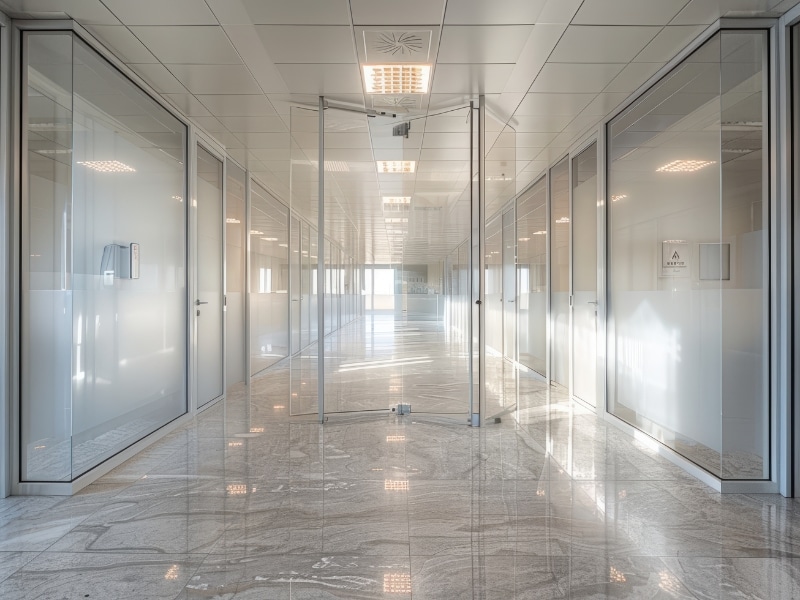
Thicker glass helps with soundproofing, visual design balance, and applying finishes like frosting or tints that support privacy without compromising safety. Beyond compliance, you’ll want partitions that support work comfort and design consistency. These factors influence thickness, too:
- Privacy: Soundproofing needs increase in thickness, especially with single panels. Laminated glass is ideal here.
- Noise control: Thicker or layered glass reduces office echo, especially in open-plan environments.
- Design balance: Slim, minimalist glass can look fragile if too thin. Thicker panels can provide a firmer, more premium feel without appearing visually heavy.
These choices aren’t simply cosmetic—they affect budget, comfort and how long your partitions stay problem-free.
Choosing the right glass partition thickness
When you work through your priorities and constraints, the right glass partition thickness emerges as the one that balances safety, performance, cost, and design. To recap:.
- Choose glass type ( toughened, or laminated) based on safety, size, and use.
- Design your layout considering full height vs partial height, traffic paths, and panel sizes.
- Pay attention to installation details: edges, supports, safety markings, etc.
- Account for privacy, noise, and aesthetic goals—not afterthoughts, but core parts of the specification.
If you need help specifying panels or troubleshooting a tricky installation, consider guidance from Intrinsic Glass. Putting in the effort early to specify correct thickness, apply the standards, and plan installation properly prevents cracks, replacements, legal headaches and poor occupant experience long term.