Choosing the right kitchen splashback is one of the most important decisions in any kitchen renovation. It’s not just about looks — the right splashback protects your walls, handles heat and moisture, and impacts how easy your kitchen is to clean and maintain.
For homeowners across the Central Coast, the three most common options are glass, acrylic, and tiles. Each has its strengths, weaknesses, and ideal use cases.
This comparison breaks down glass vs acrylic vs tiles, so you can confidently choose the best kitchen splashback for your home.
What Is a Kitchen Splashback and Why Does It Matter
A kitchen splashback is the surface installed behind cooktops, sinks, and benches to protect walls from:
- Heat
- Steam
- Water splashes
- Cooking oils
- Food stains
Beyond protection, splashbacks also play a major role in your kitchen’s:
- Overall design
- Perceived space and light
- Cleanliness
- Long-term durability
- Property value
In coastal environments like the Central Coast, splashbacks must also cope with humidity, temperature fluctuations, and salt air — making material choice even more important.
Overview of the Three Main Kitchen Splashback Materials
Before diving deeper, here’s a quick overview of the three most common options.
Glass Splashbacks
- Toughened safety glass
- Custom cut and professionally installed
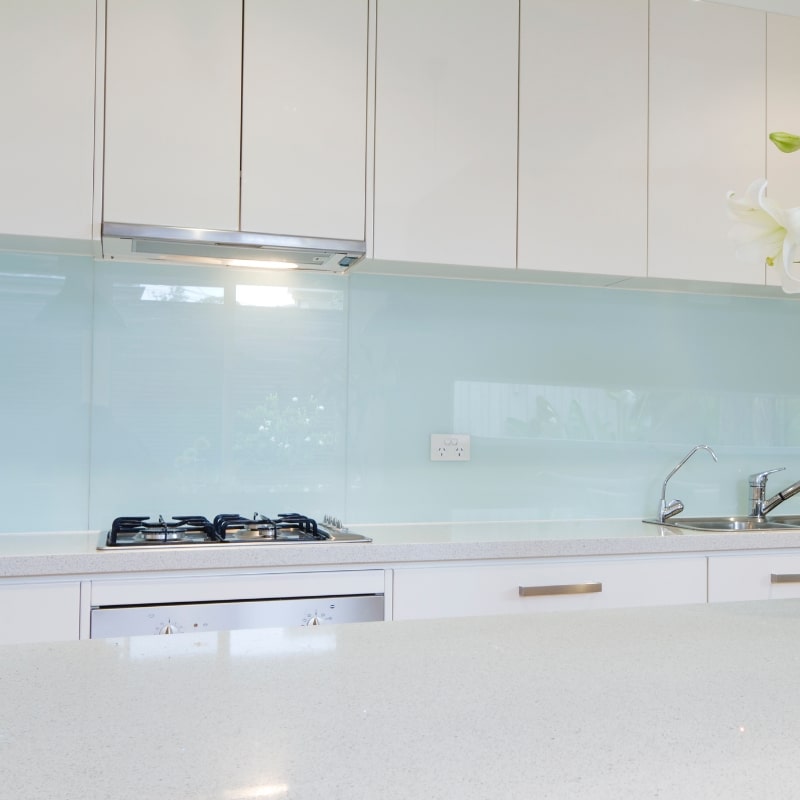
- Seamless, grout-free finish
- Available in any colour or printed design
Acrylic Splashbacks
- Lightweight plastic panels
- Cut to size off-site
- Often DIY-friendly
- Budget-focused alternative
Tiled Splashbacks
- Ceramic, porcelain, or stone tiles
- Traditional installation with grout
- Wide design variety
- Labour-intensive installation
Now let’s break down how they really compare.
Glass Kitchen Splashbacks: The Premium Performer
Glass splashbacks are widely regarded as the most durable and modern kitchen splashback option available today.
Benefits of Glass Splashbacks
- Heat resistant — ideal behind cooktops
- Non-porous and stain-resistant
- Extremely easy to clean
- Seamless appearance with no grout
- Custom colours to match any kitchen
- Reflects light and makes kitchens feel larger
When installed professionally, glass splashbacks offer a long lifespan with minimal maintenance — making them popular in modern Central Coast homes.
If you’re exploring custom glass kitchen splashbacks on the Central Coast, professionally measured and installed glass ensures a precise fit around power points, cabinetry, and appliances.
Glass Splashbacks and Heat Resistance
One of the biggest advantages of glass is heat tolerance.
- Toughened glass handles high temperatures
- Safe for gas and electric cooktops
- Meets Australian safety standards
This makes glass the safest long-term choice behind cooking zones, especially for households that cook frequently.
Maintenance and Cleaning
Glass is one of the easiest splashback materials to maintain.
- No grout lines to scrub
- Simple wipe-down with standard cleaners
- No staining or discolouration over time
This makes glass ideal for busy families and modern lifestyles.
Acrylic Splashbacks: The Budget-Friendly Alternative
Acrylic splashbacks are often marketed as a cheaper substitute for glass, but they come with important limitations.
Benefits of Acrylic Splashbacks
- Lower upfront cost
- Lightweight material
- Faster installation
- Suitable for low-heat areas
Acrylic can suit budget renovations or areas away from heat sources.
Limitations of Acrylic Splashbacks
Despite the initial appeal, acrylic has drawbacks that homeowners should consider carefully.
- Limited heat resistance
- Not suitable behind cooktops
- Can scratch easily
- May warp over time
- Can discolour with heat or UV exposure
For homeowners weighing up long-term performance, this guide on why fitting a glass splashback is the best option for modern kitchens offers deeper insight into durability, safety, and value.
Tiled Splashbacks: Traditional but High Maintenance
Tiles have been used in kitchens for decades and remain a popular choice in classic and heritage-style homes.
Benefits of Tiled Splashbacks
- Wide range of colours and textures
- Lower material cost
- Familiar and traditional appearance
- Easy to repair individual tiles
Tiles allow creative patterns and designs, particularly in feature kitchens.
The Grout Problem
The biggest downside of tiles isn’t the tiles themselves — it’s the grout.
- Grout absorbs stains and grease
- Requires regular deep cleaning
- Can crack or discolour
- Mould risk in humid environments
In coastal areas like the Central Coast, grout maintenance can become an ongoing issue.
Glass vs Acrylic vs Tiles: Side-by-Side Comparison
Durability
- Glass: Excellent
- Acrylic: Moderate
- Tiles: Good (grout reduces lifespan)
Heat Resistance
- Glass: High
- Acrylic: Low
- Tiles: High
Cleaning & Maintenance
- Glass: Very easy
- Acrylic: Easy but scratches
- Tiles: High maintenance due to grout
Visual Appeal
- Glass: Modern and seamless
- Acrylic: Simple and flat
- Tiles: Traditional and textured
Long-Term Value
- Glass: Highest
- Acrylic: Lowest
- Tiles: Moderate
Which Splashback Is Best for Central Coast Homes?
Local conditions matter.
Coastal Climate Considerations
Central Coast kitchens face:
• Higher humidity
• Temperature variation
• Salt-laden air
Glass performs best in these conditions because it:
• Doesn’t absorb moisture
• Won’t warp or swell
• Doesn’t stain or degrade
Tiles can struggle with grout deterioration, while acrylic may warp over time.
Which Splashback Adds the Most Value to Your Home?
From a resale perspective:
- Glass splashbacks are seen as premium upgrades
- They photograph well for listings
- They appeal to modern buyers
- They reduce visible wear over time
Buyers increasingly expect modern kitchens to feature glass rather than dated tiles or plastic panels.
Professional Installation Matters More Than Material Alone
Even the best material can fail if installed incorrectly.
Professional installation ensures:
• Accurate measurements
• Safe handling of toughened glass
• Proper wall preparation
• Compliance with Australian standards
Engaging local experts in custom glass splashbacks helps ensure your splashback complies with Australian renovation requirements, including guidance outlined by NSW Fair Trading’s home renovation and building standards.
Frequently Asked Questions
Which kitchen splashback is easiest to clean?
Glass splashbacks are the easiest to clean due to their seamless, non-porous surface.
Are glass splashbacks worth the cost?
Yes. While glass has a higher upfront cost, its durability, low maintenance, and longevity make it cost-effective long term.
Can acrylic splashbacks go behind cooktops?
No. Acrylic is not recommended behind cooktops due to limited heat resistance.
Do tiled splashbacks go out of style?
Tile trends change quickly. Glass offers a timeless, minimalist finish that adapts to future kitchen updates.
Final Verdict: Which Kitchen Splashback Should You Choose?
Glass remains the best all-round kitchen splashback option for Central Coast homes thanks to its durability, safety, ease of cleaning, and long-term value. Acrylic suits limited-use areas on tight budgets, while tiles remain a stylistic choice for traditional kitchens willing to manage ongoing maintenance.
If you want a splashback that performs today and still looks great years from now, glass is the clear winner.