As Aussie workplaces shift gears, so does the way we design them. Gone are the days of rigid cubicles and beige partitions. But let’s be honest—open-plan layouts aren’t all they’re cracked up to be. They’re bright and social, sure, but they can also be noisy, distracting, and downright chaotic when you’re trying to concentrate.
That’s where office division walls come into play. They give your space some breathing room—literally and figuratively. By carving out areas for quiet work, meetings, or even casual chats, these walls help strike the right balance between openness and structure. They’re not just stylish; they make your office easier to navigate, more productive, and way less frustrating to work in. Plus, the right walls can reflect your brand’s professionalism without compromising on light or flow.
Why do open plan layouts need office division walls?
Open-plan layouts promised to revolutionise office culture—more interaction, more collaboration, more light. But in reality, these setups often create more noise, more distraction, and more tension. You might hear three different conversations while trying to finish one email.
Without boundaries, productivity tends to suffer. Conversations echo, movement distracts, and it becomes hard to find a quiet spot for a serious chat or deep-focus task. This is where office division walls prove their worth. They segment open spaces into functional areas without blocking natural light or adding visual clutter. Some of the key benefits of incorporating division walls include:
- Reduced noise levels in high-traffic zones
- Clear definition between collaboration and focus areas
- Increased comfort and spatial awareness for staff
- Better aesthetics that complement modern office trends
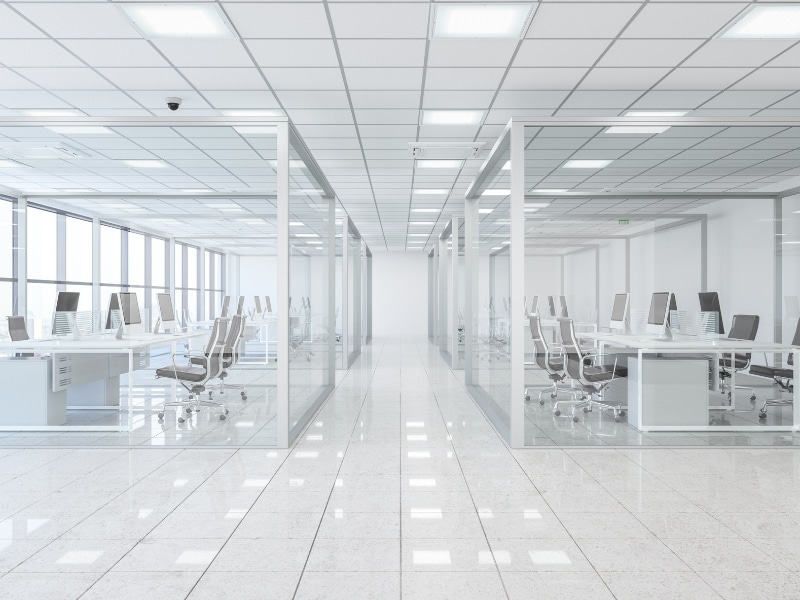
Integrating glass partitions in offices can maintain openness while still creating these much-needed separations.
What challenges arise without effective room separation?
It’s all fun and games until someone tries to hold a client meeting next to the kitchen. Lack of effective room separation ideas often leads to blurred boundaries—both physical and professional. When space lacks structure, work suffers.
People struggle to concentrate. Meetings are constantly interrupted. Break areas become spill-over work zones. This disorganisation not only affects productivity, but also team morale. It can even make your business appear unprofessional to visitors. Here’s what tends to go wrong without defined divisions:
- Confidential conversations get overheard
- Informal areas intrude on formal tasks
- Staff feel unanchored, leading to disengagement
- Collaboration becomes chaotic rather than constructive
Poor spatial planning creates more problems than it solves. Fixing it doesn’t mean building walls from floor to ceiling—it means smarter layouts. That’s why modern fit-outs lean heavily on flexible, semi-transparent solutions that maintain flow while offering function.
How do glass cubicle walls enhance modern workplaces?
Glass cubicle walls are a game-changer for businesses chasing both form and function. They’re not your average 90s-style cubicles—these are sleek, minimalist dividers that bring a polished, transparent aesthetic to any workplace.
They promote autonomy without isolation. You can still see your colleagues, but the acoustic separation means you’re not hearing every word of their Zoom call. It’s the best of both worlds—focused workspaces within a cohesive office design. Here are the benefits of using glass cubicle walls:
- Maintain line of sight and team cohesion
- Reduce noise pollution from open areas
- Allow natural light to travel through the space
- Offer privacy without sacrificing connection
If you’re exploring modern office division solutions, this approach balances visibility with discretion.
What makes internal glass walls a practical design choice?
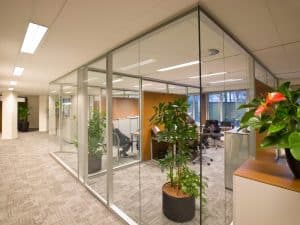
When practicality meets design, internal glass wall systems shine. They’re easy to install, modify, and maintain—and they look sharp doing it. Whether you’re fitting out a new space or updating an old one, internal glass walls offer a clean, scalable option.
Unlike solid walls, glass doesn’t block light or create visual heaviness. And thanks to toughened safety glass and modern hardware, they’re far from fragile. You’re looking at a solution that fits small startups and sprawling headquarters alike. Here’s why they make good business sense:
- Fast installation and minimal disruption
- Versatile styles to match existing decor
- Cost-effective alternative to permanent construction
- Long-lasting and easy to clean
To understand the benefits of glass partitions beyond just looks, it helps to see how they support both design and workflow.
Can glass walls in office spaces boost productivity?
Absolutely. The right workspace layout can directly influence how well people work. Glass walls in office environments create private zones without making people feel boxed in. This spatial clarity helps reduce stress and improve time management.
They also enable smarter collaboration. You can book a private meeting room or dive into a solo task—without worrying about someone needing the space for something else. It’s all about reducing friction in the daily workflow. Productivity-boosting traits of glass wall systems:
- Clear sightlines improve supervision without micromanagement
- Visual access encourages team accountability
- Bright, open environments support mental wellness
- Staff report higher satisfaction with flexible spaces
Here’s a quick comparison of wall types:
| Feature | Glass Walls | Traditional Walls |
| Natural Light | Excellent | Poor |
| Acoustic Control | Moderate (can upgrade) | High |
| Visual Aesthetic | Modern and clean | Solid and enclosed |
| Installation Time | Fast | Slower |
| Flexibility | High | Low |
How do safe glazing practices support better workplaces?
It’s not just about what the walls look like—what they’re made of, and how they’re installed, also matter. Adhering to safe glazing practices ensures your office is both stylish and compliant with regulations.
Improper glazing can pose risks: breakage, injury, or thermal inefficiency. Australian building codes outline specific rules for glass used in human impact zones, like doors, partitions, and low-level panels. Using the right type of safety glass is non-negotiable. Here’s what safe glazing means in practice:
- Using toughened or laminated glass where required
- Ensuring correct edge protection and fixings
- Avoiding sharp corners or weak points
- Meeting energy efficiency standards
Always work with professionals who understand safe glazing practices in line with Australian regulations.
Final thoughts on choosing the right office division walls
The best office division walls don’t just separate—they enhance. They define purpose, reduce noise, and improve flow. Whether you’re redesigning a warehouse space or planning a new high-rise fit-out, flexible wall systems like glass partitions offer a way to future-proof your workplace.
Think about what your team needs: privacy, transparency, focus, or maybe a bit of all three. Then choose a setup that delivers that balance without the usual drama. You can find expert advice from Intrinsic Glass that helps point you in the right direction.