
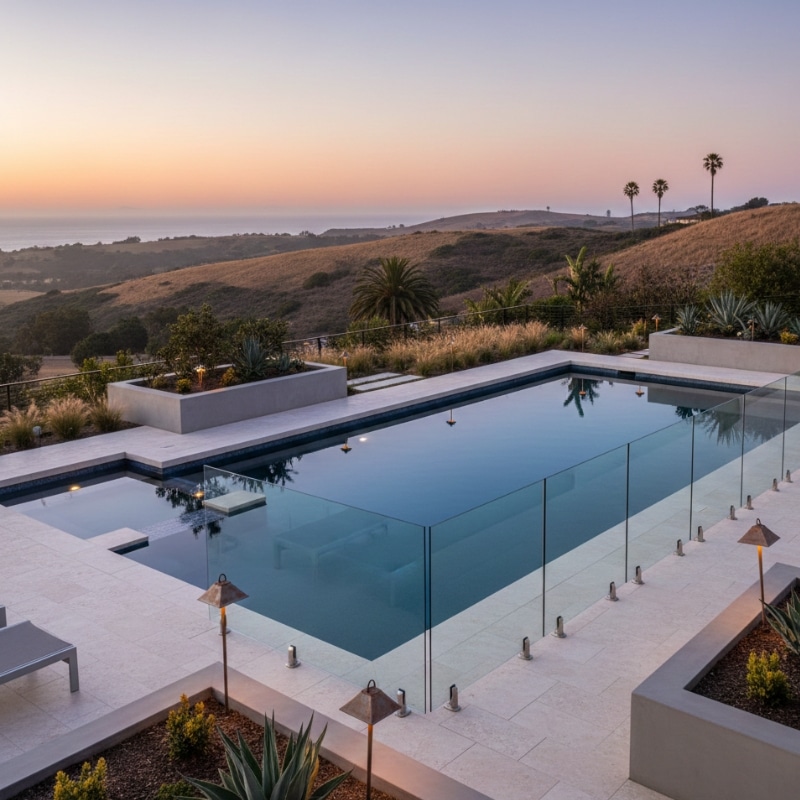
Owning a pool on the Central Coast comes with clear safety responsibilities. Pool safety barriers are designed to prevent unsupervised access—especially by young children—and NSW regulations are strict about how these barriers are built, positioned, and maintained.
This checklist breaks pool barrier compliance into plain-English steps, with a strong focus on approvals, boundary rules, and ongoing maintenance. Whether you’re preparing for an inspection, planning changes near the pool, or simply doing a seasonal check, this guide helps you spot issues early and avoid common compliance failures.
Understanding Pool Safety Barrier Rules on the Central Coast
In NSW, pool barriers must comply with the Swimming Pools Act and relevant Australian Standards. While the technical detail matters, most inspection outcomes come down to a handful of practical requirements.
What counts as a pool safety barrier?
A pool safety barrier can include:
• Freestanding fencing around the pool
• A boundary fence used as part of the barrier
• Gates, doors, and latches that control access to the pool area
• Fixed elements such as glass panels, posts, and handrails
The key requirement is that the barrier restricts access to the pool area at all times, not just when adults are present.
When compliance is required
You typically need a compliant barrier:
• For existing pools and spas on residential properties
• Before selling or leasing a property with a pool
• When a pool is registered or inspected
• After certain repairs, upgrades, or renovations near the pool
If you’re unsure about your obligations, the NSW Government clearly outlines pool owner responsibilities, inspection triggers, and certification requirements under the Swimming Pools Act. Homeowners on the Central Coast can refer to the official guidance on pool and spa owner obligations in NSW to understand when compliance is required and what inspectors assess.
Approvals: When Do Changes Trigger Compliance Checks?
One of the biggest sources of confusion for homeowners is knowing when approval is required.
Repairs vs alterations
Minor repairs usually do not trigger new approval requirements. Examples include:
• Replacing worn hinges with like-for-like hardware
• Swapping damaged glass panels of the same size and type
• Tightening fixings or realigning an existing gate
However, changes that alter how the barrier functions or is positioned can trigger current standards.
Changes that often require approval or reassessment
- Replacing a section of fencing with a different material
- Moving a gate or changing its swing direction
- Raising ground levels near the barrier through landscaping
- Using a boundary fence as part of the pool barrier for the first time
- Adding structures near the barrier that affect climbability
If you’re planning upgrades and unsure where the line is, it’s wise to clarify before work begins. Homeowners often discover compliance issues only when an inspection fails.
For properties using glass systems, understanding how approvals relate to glass pool fencing installation is especially important, as spacing, heights, and gate hardware are tightly regulated.
Boundary Fence Rules: What Homeowners Get Wrong Most Often
Boundary fences can form part of a pool safety barrier on the Central Coast, but they are also one of the most common failure points during inspections.
Height requirements for boundary barriers
When a boundary fence is used as part of the pool barrier:
• It generally must be at least 1.8 metres high
• The non-pool side is assessed for climbability
• Any footholds, rails, or objects nearby are closely examined
Even a compliant fence can fail if items nearby make it easy to climb.
Common boundary-related compliance traps
- Storing bins, pot plants, or timber stacks near the fence
- Installing trellises or privacy screens that reduce height effectively
- Landscaping that raises the ground levels against the barrier
- Retaining walls or steps built too close to the fence
A good rule of thumb: if a child could climb it, an inspector will treat it as a risk.
Neighbour-side considerations
Even though the barrier may sit on your property, inspectors assess risks from both sides. Changes on a neighbour’s side—such as new sheds or raised garden beds—can affect your compliance status, even if you didn’t install them.
Non-Climbable Zones Explained (Without the Jargon)
The non-climbable zone (NCZ) is an area around the barrier that must be kept clear to prevent climbing.
What inspectors look for
Inspectors typically check:
• No horizontal climbable elements within the NCZ
• No furniture, planters, or fixtures nearby
• No overhanging branches or fixed features reducing effective height
This applies to glass, metal, and boundary barriers alike.
Real-world examples that cause failures
- A BBQ positioned beside a glass panel
- Pool pumps or filter housings installed too close
- Decorative screens attached to fencing
- Children’s toys or storage boxes left near the barrier
These issues are often quick to fix once identified, which is why regular self-checks are so valuable.
Pool Gates: The Most Frequently Failed Component
If there’s one part of a pool barrier system that fails inspections most often, it’s the gate.
Gate rules that must always be met
- Must be self-closing from any open position
- Must be self-latching without manual assistance
- Must swing outward, away from the pool area
- Latch must be positioned or shielded to prevent child access
Even slight misalignment can cause failure.
Signs your gate may not be compliant
- The gate doesn’t fully close unless pushed
- Latch catches inconsistently
- Gate scrapes the ground or post
- Hardware feels loose or corroded
Coastal conditions on the Central Coast can accelerate wear, particularly on hinges and latches.
Coastal Maintenance: Keeping Barriers Reliable Year-Round
Salt air, humidity, and wind exposure all affect pool barrier components over time. Maintenance isn’t just cosmetic—it’s a compliance issue.
Monthly five-minute homeowner check
- Open the gate fully and confirm it self-closes and latches
- Shake posts and panels gently to check for movement
- Look for visible corrosion on hinges and fixings
- Confirm no new climbable items are nearby
Seasonal maintenance tips
- Rinse hardware with fresh water during dry, salty periods
- Check glass clamps for movement after heavy weather
- Trim vegetation back from barrier zones
- Recheck alignment after ground movement or landscaping
For homeowners investing in high-quality glass pool fencing in the Central Coast, these simple habits significantly reduce long-term issues and unexpected inspection failures.
Preparing for a Pool Barrier Inspection
Whether an inspection is scheduled or you’re selling or leasing a property, preparation makes a difference.
Pre-inspection checklist
- Verify gate operation from multiple open positions
- Measure visible gaps under and around the barrier
- Remove movable objects near the barrier
- Confirm signage and CPR chart requirements (if applicable)
- Ensure pool registration details are up to date
If something feels borderline, it usually is. Early fixes are far less stressful than last-minute scrambles.
When to Get Professional Help
Some issues go beyond simple homeowner adjustments.
Situations that warrant expert assessment
- Gate hardware is repeatedly failing despite adjustments
- Glass panels or posts showing movement
- Boundary changes or neighbour-side alterations
- Renovations affecting deck height or access point
- Uncertainty about whether a change requires approval
In these cases, speaking with a specialist can prevent compounding problems. If you’re exploring options or upgrades, it’s often helpful to learn more about glass pool fencing and how modern systems are designed to meet current standards.