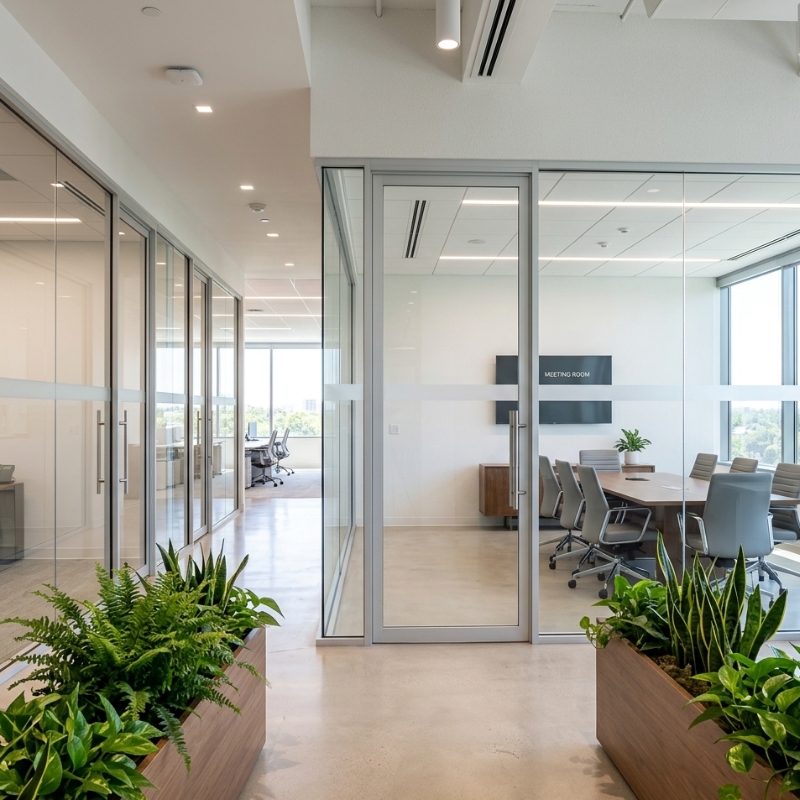
Modern offices love glass for a reason: it keeps spaces bright, helps teams feel connected, and can make smaller tenancies feel bigger—especially when glass partition layouts are used to zone areas without closing them off. But glass has a unique downside in workplaces too—when it’s hard to see, people can walk straight into it. Add in busy corridors, visitors unfamiliar with the layout, glare off the water on a sunny Central Coast afternoon, and everyday wear-and-tear, and “invisible glass” becomes a real safety issue.
This guide is designed for offices across the Central Coast, NSW—whether you’re in Gosford, Erina, Tuggerah, Wyong, or in a smaller professional suite—so you can reduce risk without turning your workplace into a maze of warning signs.
Why glass incidents happen more than people expect
Glass-related incidents in workplaces usually aren’t dramatic “glass shatters everywhere” events. More often, they’re everyday injuries and near-misses:
• Someone walks into a clear panel while looking for a meeting room
• A visitor pushes on a fixed glass panel thinking it’s a door
• A cleaner catches a mop bucket on a glass corner in a tight corridor
• A staff member carrying files doesn’t see a full-height panel at the end of a run
• A door edge clips someone in a high-traffic pinch point
• A small chip becomes a crack over time, especially around hardware or edges
The common thread is visibility, expectations, and traffic patterns. People move on “autopilot” at work—especially around kitchens, printers, receptions, and corridors. If glass isn’t obviously “there,” the human brain can treat it like open space.
Quick answer
Workplace glass safety improves fastest when you combine three things:
• Make glass easy to see (good visibility markings and contrast)
• Reduce high-speed movement into glass (layout, furniture placement, door swing awareness)
• Maintain and inspect (chips, loose hardware, worn markings, and “new hazards” after office changes)
The biggest workplace glass risks to watch for
1) Walk-into-glass collisions
Clear glass panels, sidelights, and full-height glazing can disappear visually—especially when:
• Light levels change between rooms
• There’s glare or reflections (common with coastal sun angles)
• Frosting/graphics are too subtle or placed too high/low
• People are rushing between back-to-back meetings
• Visitors don’t know where the door actually is
2) Mistaken-door incidents
A fixed panel next to a door can look like part of the opening—particularly if the door hardware is minimal, the door is frameless, or the handle doesn’t stand out.
3) Human impact in high-traffic routes
Some areas experience far more accidental contact than others:
• Corridor ends (people turn quickly and cut corners)
• Reception entries and waiting areas
• Kitchen and breakout zones
• Printer and storage rooms (carrying bulky items)
• Meeting rooms (people entering late, leaving quickly)
• Near stair landings and tight transitions between spaces
4) Breakage and cut risk from chips, cracks, and edge damage
Even if the original installation used appropriate safety glass, ongoing impacts and small edge chips can weaken panels and escalate risk over time.
5) Cleaning and maintenance hazards
Glass-related risk isn’t just about the glass itself:
• Slippery floors from overspray or wet cleaning near glass walls
• Poor visibility after cleaning streaks (ironically increasing collision risk)
• Ladders or step stools near glass edges
• Chemicals damaging films/adhesives, causing markings to peel
Visibility markings: what they are and what “good” looks like
Visibility markings (often called manifestation) are the simplest, most effective risk-reducer for transparent workplace glass. They work by making glass readable at a glance, in a variety of lighting conditions.
Good visibility markings are:
• Obvious from typical approach angles
• Present at heights that suit both adults and children (think visitors and clients)
• Repeated across large panels so there’s no “invisible” section
• Durable and easy to maintain (they don’t peel, fade, or become patchy)
Common marking types (and when they work best)
1) Contrasting dots, stripes, or geometric patterns
Great for corridors and large full-height panels because they create a repeating “this is a barrier” signal.
2) Frosted bands or blocks
Useful for meeting rooms where you want privacy plus visibility. The key is contrast and placement—subtle frosting can disappear in glare.
3) Logo/brand manifestation
Effective if it’s high-contrast and repeated consistently. A single small logo in the centre of a tall panel often isn’t enough.
4) Safety decals or icons
Helpful for doors and sidelights where the “mistaken-door” risk is high—especially when combined with clear door hardware cues.
Where markings matter most
Prioritise these spots first:
• Glass doors (including pivot doors)
• Panels beside doors (sidelights)
• Corridor-end glazing and corners
• Any “straight-line run” where people walk quickly
• Glass near kitchen/breakout entries
• Reception and visitor paths
Q&A: Do we really need markings if the glass is “obviously there”?
If everyone in the office knows the layout, it can feel obvious—until you have:
• a new starter
• a client visiting for the first time
• a contractor on site
• someone carrying equipment
• a lighting/glare change through the seasons
Markings aren’t a “nice-to-have” in busy workplaces. They’re a low-cost control that protects people who don’t have your office memorised.
Safety glass basics without the jargon
Most office internal glazing is designed to reduce injury risk if impacted or broken. Two common safety glass approaches are:
• Toughened glass (engineered to break into small pieces rather than sharp shards)
• Laminated glass (layers with an interlayer that helps hold the panel together)
Which is used (and where) depends on the application, location, and risk profile. In practical terms, you don’t need to memorise the technical detail—you need a plan for identifying higher-risk zones and ensuring the glass is appropriate and maintained.
If you want an authoritative reference point for “human impact” considerations in buildings, the National Construction Code has glazing guidance you can use as a starting point for discussions with your fit-out team: National Construction Code — glazing and human impact.
A simple workplace walkthrough audit you can do in 15 minutes
You don’t need special equipment to identify the majority of glass safety issues. Do this after hours or early morning when the office is quiet.
Step 1: Walk the visitor path
Start at the main entry and walk as if you’re a first-time visitor:
• Is it obvious where to go?
• Is it obvious where doors are?
• Are there glass panels that look like open space?
Step 2: Walk the “rush routes”
Follow the paths people take between:
• kitchen → desks
• meeting rooms → desks
• reception → meeting rooms
• print room → work zones
Look for:
• corridor ends with glass
• sharp corners with glass
• panels beside doors that could be mistaken for openings
Step 3: Check markings and contrast
Ask:
• Are markings visible in glare?
• Are there big “blank” sections of glass?
• Are markings peeling, patchy, or worn?
Step 4: Check door behaviour
Observe door swing zones and pinch points:
• Does a door open into a traffic path?
• Can someone step into a door swing unexpectedly?
• Do people push on a fixed panel accidentally?
Step 5: Check condition
Scan for:
• chips, cracks, edge damage
• loose handles, rattling hardware, misaligned closers
• anything that looks like it’s been “bumped” repeatedly (scuffs at hip height are a clue)
Q&A: What’s the most common “hidden” risk?
Glass beside doors. People aim for the opening and misjudge the boundary, especially when distracted. Markings and clear hardware cues reduce this fast.
Everyday risk reduction that doesn’t ruin the design
You can reduce incidents without turning your office into a warning-sign factory.
Use layout to slow people down near glass
Subtle controls work well:
• place planters or low furniture to gently guide traffic away from glass corners
• avoid straight-line “runways” that end at a full-height panel
• keep waiting areas and informal meeting spots away from corridor pinch points
• ensure the door location is visually obvious (handle contrast helps)
Manage glare and reflections
Central Coast offices often deal with bright sun and reflective conditions—especially in spaces with lots of natural light. Consider:
• blinds or light-diffusing window treatments (to reduce reflections that “erase” glass edges)
• matte finishes near glass rather than highly reflective surfaces
• consistent lighting across transitions (avoid “dark room to bright corridor” jumps)
Maintain visibility with better cleaning habits
Streaky glass can be harder to read than clean glass. A few practical tips:
• standardise cleaning methods so markings don’t peel
• avoid harsh chemicals on films unless they’re rated for it
• keep microfibre cloths and appropriate cleaners available
• spot-clean fingerprints on doors more frequently than large panels
Put near-misses on the safety agenda
If someone “almost” walks into a panel, treat it as useful data:
• Where did it happen?
• What was the lighting like?
• Was the person carrying something?
• Was the marking worn or missing?
One or two near-misses often point to the exact panel that needs better manifestation.
Visibility markings: placement principles that work in real offices
Rather than trying to remember precise measurements, use these practical rules of thumb:
• Put markings where people naturally look while walking (not only at head height)
• Repeat markings across wide panels so there’s no “invisible lane”
• Ensure markings contrast with what’s behind the glass (a light frosting on a bright background can vanish)
• Treat doors and sidelights as a single hazard zone—mark both consistently
• If you have multiple glass areas, use a consistent visual language throughout the tenancy
Q&A: If we frost the glass, do we still need markings?
Sometimes frosting is enough. Sometimes it isn’t—especially if it’s subtle, placed too high, or doesn’t repeat across the panel. The real test is simple: can a first-time visitor identify the boundary instantly from multiple angles?
When to call a qualified glazing professional
Some issues are “update the markings and move on.” Others need expert inspection and action. Consider professional support when you see:
• chips or cracks, especially near edges or hardware
• recurring impacts in the same location (a sign the design/markings aren’t working)
• loose door hardware, misaligned hinges, or failing closers
• peeling films or markings you can’t keep adhered (surface prep may be the issue)
• a layout change that altered traffic flow (new desks, new meeting rooms, new entry path)
• any incident involving injury or significant impact
If your office is planning changes, it can also help to understand the broader benefits of glass partitions in modern offices from a functional standpoint—then pair those benefits with the right safety controls so the space stays both impressive and practical.
Making safety part of fit-out decisions (without turning it into a project)
Even small fit-outs or minor office refreshes can create new risks:
• moving a meeting room entry
• adding a new corridor wall
• switching a swing door to a pivot door
• increasing visitor flow to a new area
A good approach is to build a “glass safety check” into your change process:
• before the change: identify new sightlines and traffic routes
• during: ensure markings and hardware are consistent and visible
• after: do a walkthrough and watch how people actually move
If you’re comparing layouts, it’s worth reviewing glass partition options for offices through a safety lens as well—some choices make door locations clearer, reduce pinch points, or simplify consistent marking placement.
A practical checklist for managers and WHS reps
Use this as a monthly or quarterly check.
• All glass doors have clear visibility markings
• Sidelights and adjacent fixed panels are marked consistently
• Markings are intact (not peeling, patchy, or fading)
• Door hardware is secure and obvious to users
• No chips/cracks/edge damage visible
• Corridor-end glazing is clearly visible from approach angles
• Furniture or planters don’t create a “false opening” illusion
• Cleaning processes don’t damage films/decals
• Near-misses are recorded and reviewed
• Changes to layout trigger a new walkthrough audit
Q&A: What’s the fastest improvement with the least disruption?
Updating or standardising manifestation on doors, sidelights, and corridor-end panels usually delivers the biggest immediate drop in collisions—often without changing the layout at all.
Central Coast considerations: what’s a little different here?
Workplaces on the Central Coast often combine:
• strong natural light
• seasonal sun angle changes
• visitor-heavy professional services (health, finance, real estate, legal)
• shared tenancies with changing traffic patterns
• a mix of older buildings and newer fit-outs
That combination makes “visibility under different lighting conditions” a bigger deal than many teams realise. A panel that looks obvious on a cloudy day can disappear in late-afternoon glare, especially near entries.
If your space is client-facing, you’ll often get more safety mileage by designing for the least-familiar person: the visitor.
FAQ
Are visibility markings mandatory on office glass in NSW?
Requirements depend on the type of building, the glazing location, and the risk profile. As a practical safety measure, clear manifestation is widely used because it reduces collisions and is easy to maintain. If you need compliance certainty for a specific fit-out, use authoritative guidance (like the NCC) and consult qualified professionals.
What’s the difference between “stickers,” “manifestation,” and “markings”?
In workplaces, people often say “stickers,” but the concept is the same: a visual treatment that makes glass readable as a barrier. “Manifestation” is a common industry term for planned, consistent visibility markings.
Do we need markings on internal glass if staff are used to it?
Staff familiarity helps, but it doesn’t protect visitors, new starters, contractors, or distracted workers. Markings also help when lighting changes or the office layout evolves.
How do we stop people mistaking a fixed panel for a door?
Combine:
• clear door hardware cues (handle visibility)
• markings on both the door and the adjacent panel
• consistent design language (doors always look like doors)
What should we do after someone walks into a glass panel?
Treat it like a near-miss investigation:
• photograph the area and lighting conditions
• check whether markings are missing or worn
• review traffic flow and door location clarity
• inspect the glass for chips/cracks
If the panel is damaged or repeatedly impacted, organise a professional inspection.
How often should we replace or refresh visibility markings?
Replace when they’re worn, peeling, patchy, or no longer visible under typical lighting. In busy tenancies, doors and high-touch areas often need attention sooner than large fixed panels.
Does “high-quality” glass reduce collision risk?
Quality matters for performance and durability, but collisions are primarily a visibility and behaviour issue. The best results come from pairing appropriate glazing with strong visibility markings, clear door cues, and a layout that reduces rushed impacts. If you’re planning changes, it’s helpful to consider a high-quality glass partition for offices alongside a practical safety plan.