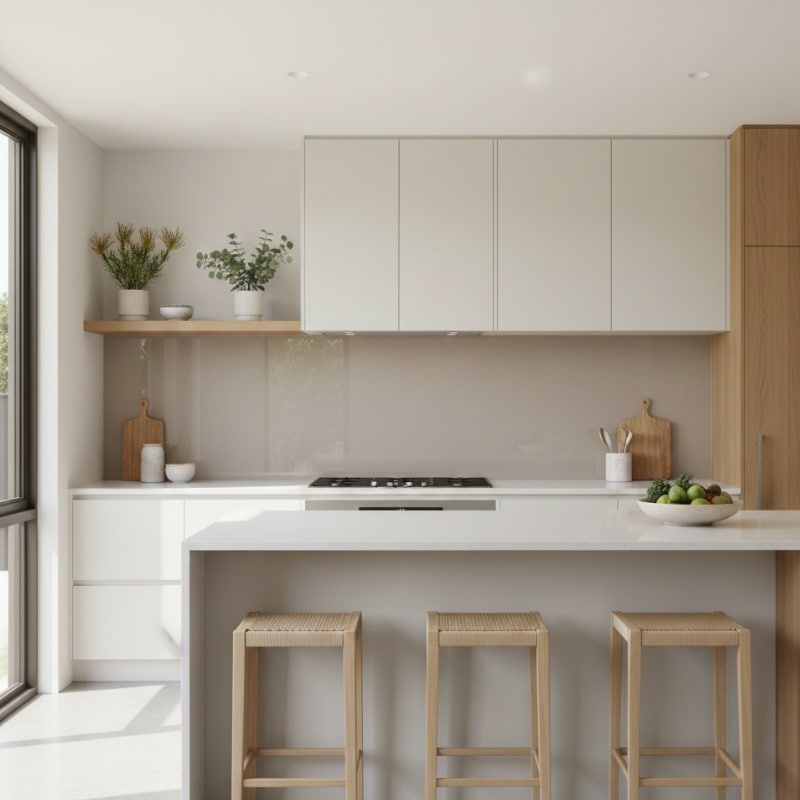
When renovating a kitchen, splashbacks often feel like a purely visual decision. Glass looks sleek. Tiles feel familiar. But once the installation dust settles, the real difference between glass splashbacks and tiles shows up over time — in cleaning effort, maintenance costs, durability, and how well each option holds up to everyday Australian kitchen use.
For homeowners on the Central Coast and across NSW, this long-term view matters. Coastal humidity, frequent cooking, family use, and modern open-plan kitchens all place ongoing demands on splashback materials. What looks affordable at the start can become frustrating or costly years later.
This guide compares glass splashbacks vs tiles from a long-term perspective, focusing on maintenance effort, durability, lifespan, and hidden ownership costs — not sales pitches or price lists.
Why long-term cost matters more than upfront price
Most comparisons stop at installation. That’s only part of the picture.
The real cost of a splashback is spread across:
• Cleaning time and products
• Ongoing repairs or touch-ups
• Resistance to stains, heat, and moisture
• Likelihood of replacement during future renovations
A splashback that costs slightly more upfront can be cheaper over 10–15 years if it requires less maintenance and lasts longer without looking tired.
Daily cleaning and maintenance effort
Glass splashbacks: smooth and low-effort
Glass splashbacks are non-porous and seamless. There are no grout lines, joins, or textured surfaces to trap grease.
Day-to-day cleaning usually involves:
• A soft cloth or paper towel
• Mild household cleaner or glass spray
• Occasional polish to remove streaks
Oil splatter, sauces, and steam residue wipe away easily. This simplicity is one reason many homeowners choose glass splashbacks for Central Coast kitchens, especially in busy households where deep cleaning isn’t realistic every week.
Over time, glass doesn’t absorb stains, discolour, or require resealing. Maintenance remains consistent year after year.
Tiled splashbacks: grout changes everything
Tiles themselves are durable and easy to wipe down. The challenge is grout.
Grout is porous, meaning it absorbs:
• Cooking grease
• Food splashes
• Moisture and steam
Regular tile maintenance often includes:
• Scrubbing grout lines
• Using specialised grout cleaners
• Periodic regrouting or resealing
In Australian kitchens where cooking happens daily, grout darkening is common within a few years — especially behind cooktops and sinks.
Maintenance comparison over time
Over 10 years:
• Glass maintains roughly the same cleaning routine
• Tiles require increasing effort as grout ages
This difference alone can influence long-term cost when factoring in cleaning products, professional regrouting, or homeowner time.
Durability in real Australian kitchens
Heat resistance behind cooktops
Both glass splashbacks and tiles are heat-resistant when correctly specified and installed.
Toughened glass used in splashbacks is designed to handle:
• High temperatures behind gas and electric cooktops
• Rapid temperature changes during cooking
Tiles also perform well near heat, but issues can arise with:
• Cracking grout
• Tile movement over time
• Adhesive breakdown if installation quality is poor
Australian building guidance, including provisions referenced in the National Construction Code, outlines safety considerations for wall linings near cooking appliances, reinforcing the importance of compliant materials and installation.
Moisture and humidity exposure
In coastal NSW areas like the Central Coast, moisture is a constant factor.
Glass performs well because:
• It doesn’t absorb moisture
• It doesn’t support mould growth
• There are no joins for water ingress
Tiles can cope with moisture, but grout lines are vulnerable. Over time, trapped moisture can lead to:
• Mould growth
• Grout deterioration
• Discolouration that’s difficult to reverse
This is a long-term durability issue rather than an immediate failure, but it affects appearance and hygiene.
Lifespan and visual ageing
How glass splashbacks age
Glass splashbacks tend to age slowly and predictably. If not physically damaged, they can look much the same after 10 years as they did at installation.
Common long-term outcomes:
• Colour remains stable
• Surface stays smooth and glossy
• No fading with normal indoor exposure
Scratches are uncommon with standard cleaning, and because there are no grout lines, there’s little visual degradation.
How tiled splashbacks age
Tiles themselves are hard-wearing, but the overall look depends on the grout condition.
Over time, tiled splashbacks may show:
• Darkened or yellowed grout
• Uneven colouring between sections
• Hairline grout cracking
Even when tiles remain intact, aged grout can make the entire splashback feel dated, prompting earlier replacement during renovations.
Repair and replacement costs
Repairing glass splashbacks
Glass splashbacks are manufactured as custom panels. If damaged, the affected panel typically needs replacement.
However:
• Damage is relatively rare
• There are no partial repairs that degrade appearance
• Replacement restores the splashback fully
In practice, many homeowners never need repairs unless an accidental impact occurs.
Repairing tiled splashbacks
Tiles offer more flexibility for spot repairs, but this comes with trade-offs.
Common tile repair scenarios include:
• Replacing cracked tiles
• Regrouting sections
• Matching discontinued tiles
Over time, finding exact tile matches can be difficult. Patch repairs often remain visible, affecting aesthetics even if functionality is restored.
Long-term cost scenarios
5-year ownership
Glass:
• Minimal maintenance changes
• Consistent appearance
Tiles:
• Early grout staining
• Increased cleaning effort
10-year ownership
Glass:
• Still low-maintenance
• Rare need for intervention
Tiles:
• Regrouting often required
• Visible ageing in high-use areas
15-year ownership
Glass:
• Often retained through minor kitchen updates
• Compatible with modern design refreshes
Tiles:
• Frequently replaced during renovations
• Aged appearance can clash with updated cabinetry or benchtops
From a lifecycle perspective, glass often spreads its cost more evenly over time, while tiles concentrate costs later through maintenance and replacement.
Design flexibility and future renovations
Glass and modern kitchen updates
Glass splashbacks integrate easily with changing styles. Neutral colours, mirrored finishes, or digitally coloured panels adapt well to:
• Cabinet changes
• Appliance upgrades
• Lighting improvements
This flexibility is one reason homeowners exploring modern glass splashback designs often view them as a longer-term solution rather than a short-term trend.
Tiles and renovation limitations
Tiles can feel locked into a specific era. Removing them:
• Risks wall damage
• Adds labour during renovations
• Increases overall project disruption
For homeowners planning future updates, this can affect long-term renovation budgets.
Hygiene and food safety considerations
Glass splashbacks support hygiene by:
• Eliminating crevices where bacteria can build up
• Allowing thorough cleaning with simple products
Tiles, particularly older installations, can harbour bacteria in grout lines if not maintained carefully.
This difference is subtle day-to-day but becomes more relevant in family kitchens or homes with frequent cooking.
Environmental and sustainability factors
Long-term durability contributes to sustainability.
Glass:
• Long lifespan reduces replacement frequency
• Easy to clean without harsh chemicals
Tiles:
• May require chemical cleaners for grout
• Often replaced sooner due to appearance rather than failure
Choosing materials that last longer can reduce waste across the life of the kitchen.
Which option suits different households?
Glass splashbacks tend to suit:
- Busy households with limited cleaning time
• Open-plan kitchens where appearance matters long-term
• Homeowners planning future renovations
• Coastal homes with higher humidity
Many homeowners researching custom glass kitchen splashbacks are motivated by these practical considerations rather than aesthetics alone.
Tiled splashbacks tend to suit:
- Traditional design preferences
• DIY renovation projects
• Short-term property updates
Understanding these differences helps align material choice with lifestyle, not just budget.
Common questions homeowners ask
Are glass splashbacks easier to clean than tiles?
Yes. The absence of grout makes routine cleaning faster and more consistent over time.
Do tiled splashbacks cost more to maintain?
Often, yes. Grout maintenance, regrouting, and deeper cleaning add to long-term effort and expense.
Which splashback lasts longer?
Glass typically maintains its appearance longer, while tiled splashbacks may need earlier replacement due to grout ageing.
Are glass splashbacks worth it in Australian kitchens?
For many households, the reduced maintenance and longer lifespan justify the choice over time.
Making a long-term decision with confidence
Choosing between glass splashbacks and tiles isn’t about which option is cheapest today. It’s about how each material performs year after year in real Australian kitchens.
Glass offers:
• Predictable maintenance
• Consistent appearance
• Strong performance in heat and humidity
Tiles offer:
• Familiar aesthetics
• Initial flexibility
• Higher long-term upkeep
By considering cleaning effort, durability, repair likelihood, and renovation compatibility, homeowners can make decisions that suit both their lifestyle and long-term budget.