
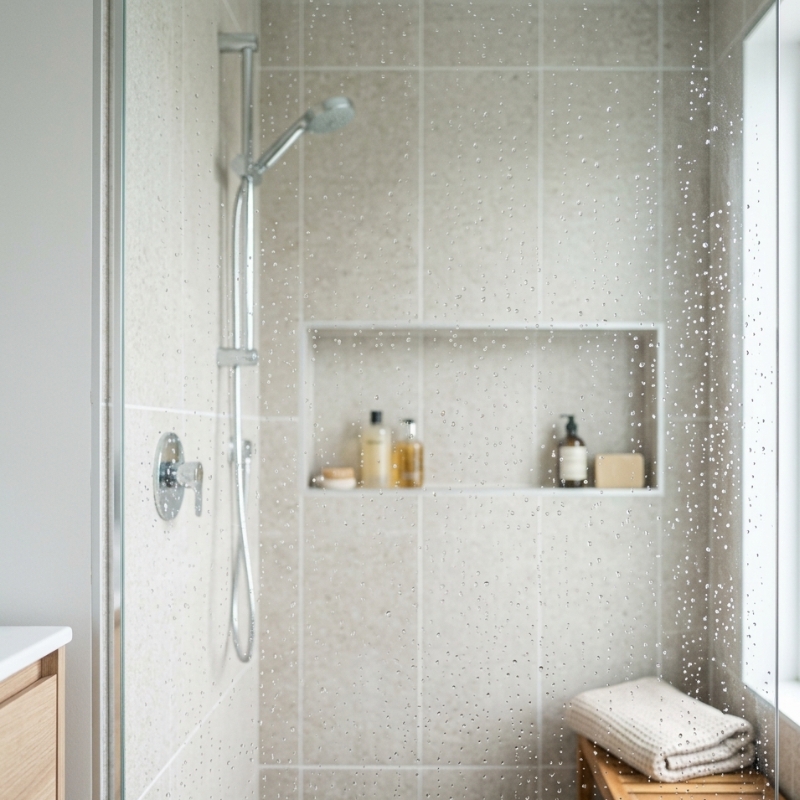
If your shower glass looks cloudy, speckled, or like it has a chalky film that never quite disappears, you’re probably dealing with hard water stains (mineral deposits) — and they can show up on any shower setup, including a frameless shower screen. They’re incredibly common in busy households because showers create the perfect cycle: water hits warm glass, droplets cling, then evaporate and leave minerals behind. Repeat that twice a day, and you’ve got a stubborn build-up that laughs at a quick wipe.
The good news: most hard water staining is removable with the right approach. The bad news: the wrong approach (over-scrubbing with abrasives or using harsh chemicals) can make the glass look worse over time, and can also shorten the life of seals and hardware.
This guide walks you through:
• What hard water stains actually are (and how they differ from soap scum and etching)
• A safe, staged removal method (least aggressive first)
• What to avoid so you don’t scratch glass or damage fittings
• Prevention habits that work in real life, especially in coastal bathrooms like the Central Coast
What “hard water stains” on shower glass really are
Hard water contains dissolved minerals, most commonly calcium and magnesium. When water sits on the glass and evaporates, those minerals are left behind as:
• White spots or speckles
• A hazy, cloudy film
• Rough patches you can feel with your fingertips
• Chalky edges where water pools (often along the bottom of the glass)
Over time, mineral deposits can become thicker and more “cement-like” (often called scale). You’ll see it most where:
• Water runs repeatedly down the same paths
• Droplets cling around hinges, handles, and brackets
• The bottom edge meets the floor channel or threshold
• Ventilation is poor, and the bathroom stays humid
For context, water “hardness” is often expressed as calcium carbonate. If you’re curious about the technical side, the Australian Drinking Water Guidelines explain hardness and how it’s measured (and why scale can form). Here’s the reference: Australian Drinking Water Guidelines — hardness (as calcium carbonate)
Quick reality check: mineral film vs soap scum vs etching
A lot of frustration comes from treating the wrong problem.
• Mineral deposits (hard water stains): typically white/grey, rough, chalky, and often respond to mild acids (vinegar/citric acid).
• Soap scum: more oily/grey, often smears when wiped, responds better to a degreasing cleaner or dishwashing liquid first.
• Etching: permanent damage to the glass surface, often from long-term mineral build-up or harsh cleaners. It can look like cloudiness that doesn’t change no matter what you do.
A simple “which one is it?” test you can do in 2 minutes
- Rinse a small patch of glass with warm water and wipe with a microfibre cloth.
• If it looks dramatically better when wet but turns cloudy when dry, that often points to mineral film or soap residue. - Put a small amount of white vinegar on a cloth and press it onto a test spot for 2–3 minutes.
• If the patch improves, you’re likely dealing with mineral deposits.
• If nothing changes at all after a couple of tries, you may be dealing with etching (or a combination of etching plus residue).
If you suspect etching, skip the aggressive scrubbing. It won’t “lift” like a deposit does. You’ll want a different strategy (more on that below).
Why hard water stains build up faster in everyday bathrooms
Hard water stains aren’t just about the water. The environment and your routine matter.
• Frequent use: more wet/dry cycles = more deposits.
• Hot showers: warmth speeds evaporation, leaving minerals behind more quickly.
• Poor ventilation: humidity slows drying, letting minerals spread into films.
• Cleaning habits: wiping with a gritty sponge or powder can create micro-scratches that trap minerals.
• Coastal conditions: on the Central Coast, salty air and humidity can add another layer of “grime” on fittings and make a bathroom feel damp longer, which encourages build-up and mould.
Q&A: Why do the stains come back so quickly?
Because mineral deposits aren’t a one-off event. If water is drying on the glass daily, the deposits are rebuilding daily. Removal is step one; prevention is what keeps the glass clear.
What not to do (even if the internet says it works)
Some methods “work” in the short term but cost you later.
Avoid:
• Steel wool, scouring pads, or gritty “magic” blocks used aggressively
• Abrasive powders (especially on coated or treated glass)
• Scraping with a razor blade unless you know exactly what you’re doing (and only for stuck-on residue, not scale)
• Mixing chemicals (especially anything containing bleach with acids like vinegar)
• Letting strong chemicals sit on seals, silicone, grout lines, or metal hardware for long periods
If you’re unsure, treat your shower glass like a car windscreen: gentle chemicals, soft cloths, and patience beat brute force.
Safe removal method: start gently and step up only as needed
Below is a staged approach designed to protect glass, seals, and hardware. You’ll get better results if you work on cool glass (not right after a hot shower).
What you’ll need
• White vinegar or citric acid powder (from supermarkets)
• Spray bottle
• Microfibre cloths (at least 2)
• Non-scratch sponge
• Baking soda (optional, for stubborn patches only)
• Gloves
• A squeegee (for prevention later)
Tip: If you have stone tiles or natural stone in the shower area, be careful with acids. Avoid runoff onto stone and rinse thoroughly.
Step 1: Pre-clean to remove soap scum and oils
Minerals sit on top of oils and soap residue, so tackle that first.
- Rinse the glass with warm water.
- Wash the glass with a few drops of dishwashing liquid in warm water using a microfibre cloth or non-scratch sponge.
- Rinse thoroughly and dry with a clean cloth.
This step alone often improves “cloudiness” because it removes the smearing layer that traps minerals.
Step 2: Vinegar compress (best for light-to-moderate stains)
Instead of spraying and watching it run off, use a compress so the acid stays in contact with the deposits.
- Soak a microfibre cloth or paper towel in white vinegar.
- Press it onto the stained area and leave for 5–10 minutes.
- Wipe gently in small circles.
- Rinse very well, then dry.
If the stains are widespread, work in sections so the vinegar doesn’t dry on the glass.
Step 3: Citric acid spray (best for heavier mineral film)
Citric acid can be a more consistent option than vinegar for thicker scale.
- Dissolve 1–2 tablespoons of citric acid powder in a spray bottle of warm water.
- Spray onto the glass (again, working in sections).
- Let it sit for 5 minutes.
- Wipe gently with a microfibre cloth or non-scratch sponge.
- Rinse thoroughly and dry.
If you see improvement but not perfection, repeat once more rather than scrubbing harder.
Q&A: How long should I leave vinegar or citric acid on the glass?
Long enough to soften deposits, not long enough to dry out. Aim for 5–10 minutes per section, then rinse. If it dries, re-wet it rather than “scrape” the dried residue off.
Step 4: Spot treatment for stubborn patches (carefully)
For isolated, thick deposits (often near the bottom edge):
Option A: Baking soda paste (gentle abrasive used lightly)
- Make a paste of baking soda and water.
- Apply to the spot with a damp cloth.
- Rub very lightly, then rinse thoroughly and dry.
Option B: Repeat acid + gentle agitation
Often, repeating Step 2 or 3 is safer than introducing abrasives.
The goal is to remove deposits while leaving the glass surface as smooth as possible, because smooth glass resists build-up better.
Step 5: Final rinse and dry (this matters more than people think)
After any acid-based cleaning:
• Rinse well to remove residues
• Dry the glass completely with a clean microfibre cloth
Letting rinse water air-dry can reintroduce spots immediately, especially if your water is on the harder side.
If nothing works: when it’s likely etching (and what you can do)
If you’ve repeated the acid method a few times and the glass still looks cloudy, one of these is likely happening:
• The glass is etched (surface damage)
• There’s a coating that’s degraded unevenly
• The staining is inside micro-scratches from past abrasive cleaning
What helps depends on the cause:
• Light etching can sometimes be improved with specialist glass polishing products (used carefully)
• Severe etching may not fully disappear, and you may shift your focus to minimising how visible it looks (improved lighting, consistent drying, and prevention)
If you’ve got a shower that’s being renovated or upgraded, this is also where it helps to understand high quality shower screen glass options so you can make choices that suit your household’s cleaning reality (kids, frequent showers, hard water, coastal humidity).
Prevention: the simplest routine that actually sticks
You don’t need an elaborate system. You need two habits and one “reset” clean.
Habit 1: Squeegee after the last shower of the day
It takes 20–30 seconds and reduces drying droplets dramatically. Focus on:
• The main panel where water runs
• The bottom edge
• Around handles and hinges
Habit 2: Dry the edges and hardware
After squeegeeing, quickly dry:
• Bottom edge where water pools
• Metal brackets/hinges (reduces spotting and corrosion)
• Seals and channels (reduces grime build-up)
This is especially helpful in Central Coast bathrooms where damp air can linger.
Weekly reset: quick wipe with a mild cleaner
Once a week:
• Dishwashing liquid + warm water, wipe and rinse
• Dry fully
This stops soap scum from becoming the “glue” that holds minerals in place.
Optional: protective coating
Some glass treatments can help water bead and run off. If you choose one:
• Follow instructions carefully
• Make sure it’s suitable for shower glass
• Keep expectations realistic: coatings reduce effort, but they don’t eliminate cleaning
Q&A: Should I get a water softener?
If you’re dealing with hard water throughout the home (kettle scale, tap build-up, cloudy dishes), whole-home solutions can help. But for most households, the highest return is simply stopping water from drying on the glass every day.
Cleaning around seals, silicone and channels without causing problems
A lot of people unknowingly create issues by forcing cleaners into joints and channels.
Do:
• Use cloths rather than heavy spraying near the bottom edge
• Rinse gently but thoroughly
• Dry along silicone lines so residue doesn’t cling
Don’t:
• Flood the channel with chemicals
• Leave acidic cleaners sitting on silicone or metal parts
• Use stiff brushes that can lift silicone edges over time
If you’re ever unsure whether your screen is aligned and draining correctly, it helps to understand why accuracy matters when installing shower screen because tiny tolerances affect how water behaves—especially near edges and seals.
Central Coast bathroom tips: ventilation makes cleaning easier
Even when water hardness is the main culprit, humidity makes deposits and grime more stubborn.
Small changes that help:
• Run the exhaust fan during and for 15–20 minutes after showers
• Open a window where possible
• Keep towels and bathmats from drying in the shower area
• Fix drips (a slow drip creates constant mineral deposits in one spot)
These steps also reduce mould risk, which keeps the whole space easier to maintain.
Troubleshooting: common scenarios and what to do
“The glass looks clean when wet but cloudy when dry”
Likely mineral film or etching. Try the vinegar test patch. If the patch improves, continue staged removal. If it doesn’t, assume etching and avoid aggressive scrubbing.
“I’ve removed stains, but there are still streaks”
Often residue. Re-wash with dishwashing liquid, rinse thoroughly, and dry with a clean microfibre cloth.
“The bottom edge is always the worst”
That’s where water pools and dries more slowly. Focus prevention efforts there: dry it daily.
“I’m worried about scratching the glass”
You’re right to be cautious. Stick to microfibre cloths and non-scratch sponges. Let chemistry and time do the work, not force.
If you’re planning an upgrade or replacing older glass that’s etched beyond what you can live with, this is where exploring shower screen glass solutions can be a practical next step—particularly if you want a finish that suits your cleaning preferences.
FAQs
Are hard water stains permanent?
Most aren’t. Mineral deposits usually dissolve with mild acids and gentle agitation. If the glass is etched, that part is permanent damage rather than a removable deposit.
Can vinegar damage shower glass?
On standard shower glass, vinegar is generally safe when used sensibly and rinsed well. The bigger risk is letting acids sit on seals, grout, stone surfaces, or metal hardware for too long. Always work in sections, then rinse and dry.
What’s safer: vinegar or citric acid?
Both are mild acids and can work well. Citric acid solutions can be more consistent for thicker build-up. The safest approach is whichever you use with controlled contact time, gentle wiping, and thorough rinsing.
Can I use a razor blade on shower glass?
It’s risky if you’re not experienced. Razor blades can scratch if the angle is wrong, if there’s grit on the surface, or if the glass has a coating. Use chemical softening first and avoid scraping for mineral scale.
Why does my shower glass get cloudy so fast?
Because water dries on the glass daily, leaving minerals behind. Heat, poor ventilation, and soap residue speed it up. The fastest fix is daily squeegeeing and drying the bottom edge and hardware.
What if my shower glass has black spots or mould nearby?
That’s often a moisture and ventilation issue. Reduce humidity, clean regularly, and make sure you’re drying edges and seals so grime doesn’t accumulate.
How often should I deep clean the glass?
If you squeegee daily, a light weekly clean is usually enough. If you don’t, you’ll likely need more frequent removal efforts as minerals build quickly.