
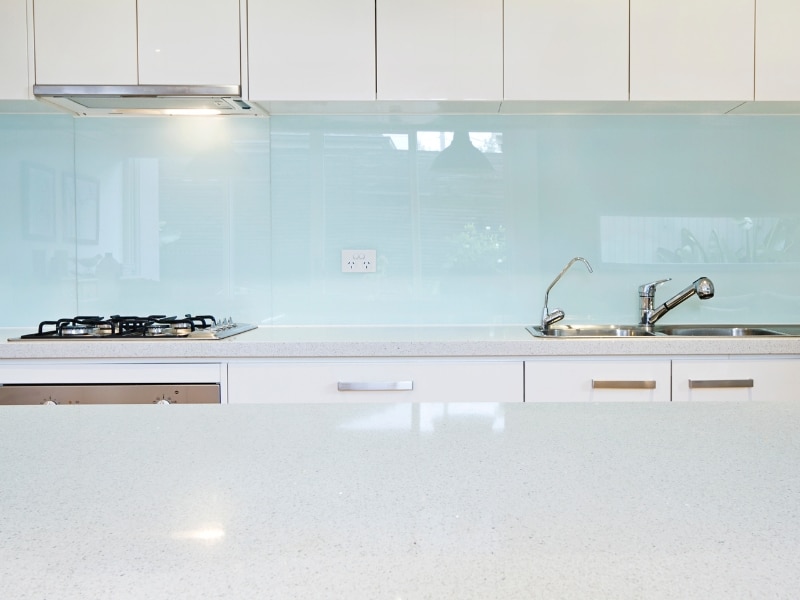
Picking glass splashback colours shouldn’t be the hardest part of designing a kitchen — but it often is. The options are endless, the finishes all catch the light differently, and what looks right in one home might fall flat in another. You might already have a colour in mind, only to second-guess it once you start holding samples against your cabinets. That pale blue? Too cold. The smoky grey? Suddenly, it makes everything look dark. And don’t even get started on how the lighting changes things from morning to night.
The truth is, splashbacks do more than fill the space between your benchtop and cupboards — they help pull the whole kitchen together. Get the colour right, and everything just clicks. Get it wrong, and even the best cabinetry can look off. This article breaks down why people struggle with choosing colours, what goes wrong when you get it wrong, and how to make sure your final choice feels spot-on — every time you walk into the room.
Why do homeowners struggle to choose glass splashback colours?
It’s no secret—choosing splashback colours can throw even the most confident renovators. The problem? Glass reflects both light and surroundings, which means colours shift depending on the time of day or where you’re standing.
- What looks fresh under bright daylight might look dull under warm pendant lights.
- Some tones highlight grease and fingerprints more than others.
- Others seem perfect on a paint swatch but appear totally different behind glass.
And let’s not forget the other players—your benchtops, cabinetry, floorboards, and even your appliances. Suddenly, a simple colour choice becomes a jigsaw puzzle. Some Aussies play it safe with neutrals, only to feel disappointed when the kitchen ends up looking cold or flat. Others swing boldly and later realise the splashback steals too much attention.
A good halfway point? Coloured glass splashbacks—they offer personality without going over the top. It’s easy to see why so many people find this step tricky. You’re not just picking a colour—you’re picking a permanent fixture that ties your whole kitchen together.
How can the wrong glass splashback colours affect your kitchen?
Choosing the wrong splashback colour doesn’t just throw off the design — it can make the whole kitchen feel unsettled. Something might look great in theory, but feel completely wrong once it’s on the wall.
- Bright, bold colours can overwhelm white cabinetry and throw off the balance.
- Dark shades often absorb too much light, making smaller kitchens feel boxed in.
- Super pale colours? They tend to highlight every splash, smear, or greasy fingerprint.
- Undertones matter too — green or yellow hints can cast strange tints across benchtops and walls.
- And the wrong finish can backfire. A matte version might flatten out a shade that looked perfect in gloss.
That’s why more homeowners are starting to lean toward textured glass splashbacks, which add depth and can quietly boost your kitchen’s value without stealing the spotlight. Getting the colour wrong doesn’t just affect how things look. It can throw off the whole feel of the kitchen. And let’s be honest — no one wants to live with a space that feels wrong every time you walk in.
What problems arise when matching the colours of glass splashbacks with benchtops?
Anyone who’s tried to pair a splashback with a patterned benchtop knows it’s not as straightforward as it sounds. What looks fine in isolation can suddenly feel out of place when you see it next to timber, stone, or tiles already in the space. Some pairings end up looking too similar — everything blends and nothing stands out. Others are so different that they pull the room in opposite directions. And once it’s installed, it’s not something you can ignore or easily fix.
- A warm-toned benchtop can make a cool-coloured splashback look out of place — and vice versa.
- If both elements have busy patterns, they’ll end up fighting for attention.
- Even the finish matters: a glossy splashback might reflect a marbled surface too strongly, doubling the visual noise.
- And tonal mismatches (like beige next to icy grey) can flatten the whole space or make it feel awkwardly mismatched.
One option that avoids those clashes is experimenting with white frosted splashback designs — they sit quietly in the background while still adding some depth.
Which kitchen mirror splashback styles work well in modern homes?
Mirror splashbacks have become a go-to for modern kitchens, not just for their look, but for how they change the feel of a space. They reflect light around the room, which makes a big difference in smaller or darker areas.
- Reflective surfaces bounce daylight, making compact kitchens feel more open.
- They pair well with minimalist cabinetry and sharp-lined benchtops.
- Cleaning is a breeze—less visual mess, more clear, calm shine.
- Smoky or bronze-tinted mirror splashbacks add subtle colour variation without being too bold.
- Mirror glass works especially well in open-plan spaces where continuity between living and kitchen matters.
Here’s a quick comparison:
| Style Feature | Benefit |
| Mirror splashback surface | Brightens, makes space feel bigger |
| Neutral or metallic tint | Adds subtle interest without clash |
| Seamless glass panels | Creates an uninterrupted, streamlined look |
Modern homes also benefit from installers who are trained and accredited. If you’re planning a DIY or professional fit-out, exploring glass splashback installation training guidelines can help ensure a high-quality finish.
How does a white kitchen splashback brighten darker spaces?
A white kitchen splashback is the silent hero in dimmer spaces. It reflects every available ray, boosting ambient brightness. Clean, crisp tones feel inviting and never date.
- White reflects whatever light it gets — morning, midday, or downlights — helping the whole space feel less boxed in.
- It pairs well with dark cabinetry, letting the contrast do the heavy lifting without overwhelming the room.
- High-gloss finishes bounce light around, while frosted styles keep things soft and reduce glare.
- White also gives you room to play. You can bring in colour through accessories, stools, or hardware without worrying about clashing.
In older homes or units where lighting can be patchy, white helps tie everything together. It doesn’t need to shout to make an impact — it simply lifts the room. It’s a safe bet, but not a boring one, especially when layered with texture or paired with warmer tones elsewhere.
Final thoughts on selecting the right glass splashback colours
Picking a splashback colour can catch you off guard. You think it’s just another detail — until you’re faced with ten options and none of them feel quite right. Some look too stark, others too loud. What you really want is something that just fits — not because it’s trendy, but because it works in your kitchen, with your light, and your setup.
Think about those everyday moments. Early mornings with the kettle boiling. Dinner bubbling away under warm lights. How do you want the room to feel in those moments? Calm? Bright? A bit luxe? That’s what your splashback needs to support. Not just colour on the wall — but a vibe that suits your life.
If you’re stuck between a few options or just want to talk it through, reach out for in-depth advice by Intrinsic Glass — we’re happy to help you make the right call.