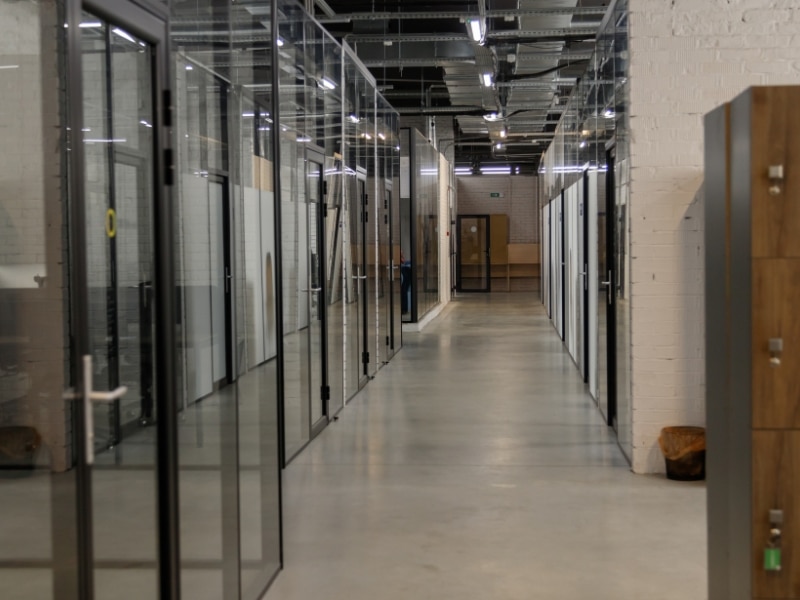
Scandinavian, industrial, contemporary minimal, biophilic, and coastal schemes suit frameless glass office partitions because they amplify light, legibility, and calm without visual clutter. These styles shape movement and focus, so people navigate quickly and settle into deep work sooner. When solid walls hog daylight and block cues, energy dips; when transparency is tuned with films and seals, momentum builds. Two recurring headaches—sound bleed undermines focus and glare risks on screens—can be solved with acoustic laminates, shading, and smart desk orientation. Because materials mirror intent, pairing clean glass lines with warm timber or soft textiles keeps things human, not clinical. Planning still matters, though; map tasks first, then match each zone to its glass performance and privacy level. This article explains how to pick design styles that flatter glass, shows where privacy and acoustics fit, and outlines practical, compliant options for Australian workplaces.
Why is choosing the right office design style so important for productivity?
A clear design style functions like workflow code, guiding movement and collaboration so teams stay on the job. Here are the productivity levers:
- Zoning clarity: Define focus, huddle, and project areas to make context switching smoother.
- Daylight strategy: Extend sightlines to increase daylight, thereby sustaining accuracy and mood.
- Material rhythm: Keep finishes consistent, reducing visual noise and decision fatigue.
- Acoustic intent: Place absorptive surfaces and seals where calls spike to stabilise volume.
- Wayfinding cues: Align film bands with furniture for intuitive circulation.
Teams also benefit from visible work-in-progress, which speeds feedback and trims rework. Mid-floor legibility prevents duplicate effort and slows the arvo slump. Understanding how office partition walls enhance workplace productivity shows how spatial choices support concentration and autonomy. In short, decide the style, then express it through glazing, light, and acoustics for reliable daily gains.
How do traditional office walls limit creativity and natural light flow?
Traditional walls block daylight, disrupt sightlines, and stifle spontaneous feedback, thereby slowing creative momentum. Here are the common blockers:
- Visual barriers: Hide prototypes, whiteboards, and body language that prompt immediate feedback.
- Light bottlenecks: Deep plans darken quickly, dulling circadian cues by mid-arvo.
- Echo tunnels: Long, hard corridors bounce chatter and fatigue attention.
- Fixed layouts: Costly changes discourage iteration as teams grow or pivot.
- Blind corners: Clunky wayfinding adds detours between tasks.
These effects stack until decisions crawl and rework piles up. It doesn’t mean open chaos; it means visibility with intentional boundaries. Wrap-up: trim barriers that aren’t earning their keep, and creativity will breathe easier—no dramas.
What makes frameless glass office partitions ideal for modern, open layouts?
Frameless systems create legible floors where people can quickly read rooms and move with purpose. Here are the modern-layout wins:
- Continuous sightlines: Minimal junctions keep views clean for ad-hoc check-ins.
- Space optimisation: Subtle divisions carve useful zones without shrinking volume.
- Door choice: Sliding or pivot doors tune flow and acoustic separation.
- Finish compatibility: Glass teams well with timber, concrete, and soft textiles.
- Future-proofing: Modular components simplify reconfiguration when teams change.
Informative table — features reflected on the service page
| Service-page feature | Design outcome | Useful spec note |
| Space optimisation | Defined areas without losing openness | Plan film heights to protect screens while keeping the upper glass clear. |
| Improved light distribution | Brighter cores and easier wayfinding | Balance daylight with shading and matte finishes near windows. |
| Enhanced privacy & sound control | Tunable openness with discretion | Combine laminated panes, perimeter seals, and door drops in call rooms. |
| Modern and stylish | Cohesive, contemporary aesthetic | Let clean glass lines carry the style; layer texture via furniture. |
When a flexible backbone is needed without heavy framing, reliable frameless glass solutions for workspace design provide a system that scales and still looks sharp. In brief, build for future moves while keeping today’s comfort sorted.
How can frameless glass office partitions balance privacy and openness?
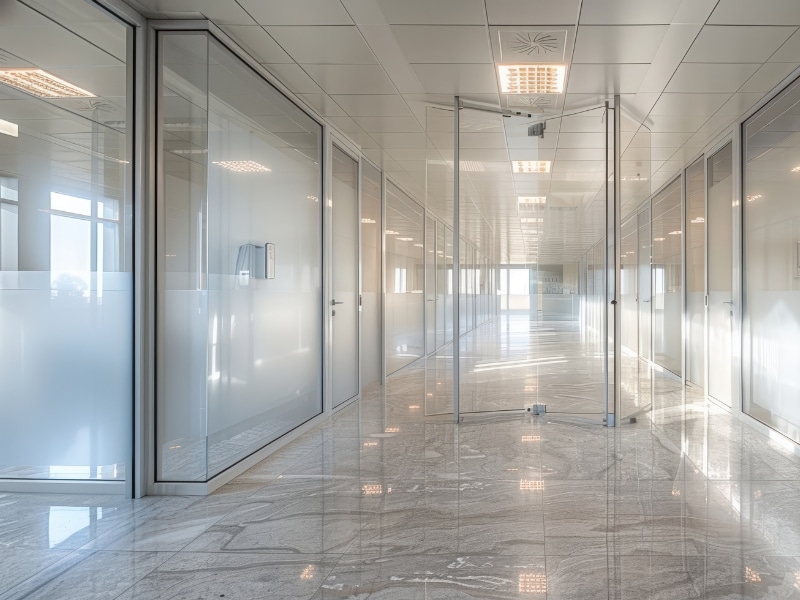
Privacy isn’t binary; gradients, interlayers, and seals let openness and discretion coexist nicely. Here are the tuning methods:
- Gradient or linear films: Screen seated-height monitors while preserving upper-glass visibility.
- Laminated acoustics: Add mass to curb speech transmission without dimming light.
- Door sweeps and drop seals: Close the gaps so meeting rooms don’t leak.
- Switchable glass: Toggle privacy for workshops, briefings, or client walk-throughs.
- Planting screens: Layer biophilic elements to soften views without bulk.
Getting thickness right improves stability and sound; door feel and span limits depend on the build. For specifics, the best glass wall thickness options for modern office partitions explain how thickness and lamination influence safety and acoustics. Bottom line: map tasks, then dial visuals and noise control to fit.
Which interior styles pair best with frameless glass office partitions?
Several interiors make glass feel natural—Scandinavian, industrial, biophilic, contemporary minimal, and coastal modern. Here are the pairing ideas:
- Warmth: Pale timbers and soft textures temper cool glass; avoid thin outcomes by adding film bands.
- Industrial crispness: Exposed structure and darker metals make transparency read deliberate and technical.
- Biophilic calm: Plants and earthy tones diffuse views and stress, making them great for focus pods.
- Contemporary minimal: Clean lines and monochrome reduce clutter; keep reflections in check.
- Coastal modern: Light, breezy palettes flatter Aussie light—no worries—manage glare at perimeters.
Style should flatter the glass and support tasks, not the other way round. Quick close: choose a palette that humanises clarity and tames echo.
Can acoustic and frosted glass designs enhance your office’s look and sound control?
Yes—acoustic laminates and frosted films lift privacy while keeping the plan easy to read. Here are the enhancements to consider:
- Acoustic interlayers: Add mass to prevent sound from travelling, ensuring phone rooms stay confidential.
- Frosted bands: Protect screens mid-eye level while preserving door-to-door visibility.
- Pattern rhythm: Align film breaks with furniture for an intentional, calm read.
- Hardware seals: Perimeter gaskets and thresholds stop rattles and air gaps.
- Pilot-first approach: Trial one room, then scale based on feedback and test data.
In NSW, safety and compliance apply to the selection and care of toughened glass; discover NSW compliance updates for approved glass products in offices, providing current notices and practical care guidance.
Final thoughts on blending design and function with frameless glass office partitions
The right style makes performance feel effortless, while the wrong one multiplies friction; therefore, tie aesthetics to how people actually work. Start by mapping work modes and matching each zone to glazing that delivers the privacy, light, and flow required. Tackle impact resistance has limits by pairing appropriate thickness with quality hardware, and handle glare early with shading, desk orientation, and matte finishes. Calibrate film heights to protect monitors while keeping upper sightlines open, and choose durable finishes so maintenance is minimal even in high-traffic areas. Track outcomes—focus hours, call clarity, and meeting overruns—to prove the fit-out earns its keep. For a calm, practical approach to aligning style and performance without fuss, Learn how Intrinsic Glass designs offices that feel open and connected, demonstrating a steady path from intent to implementation.