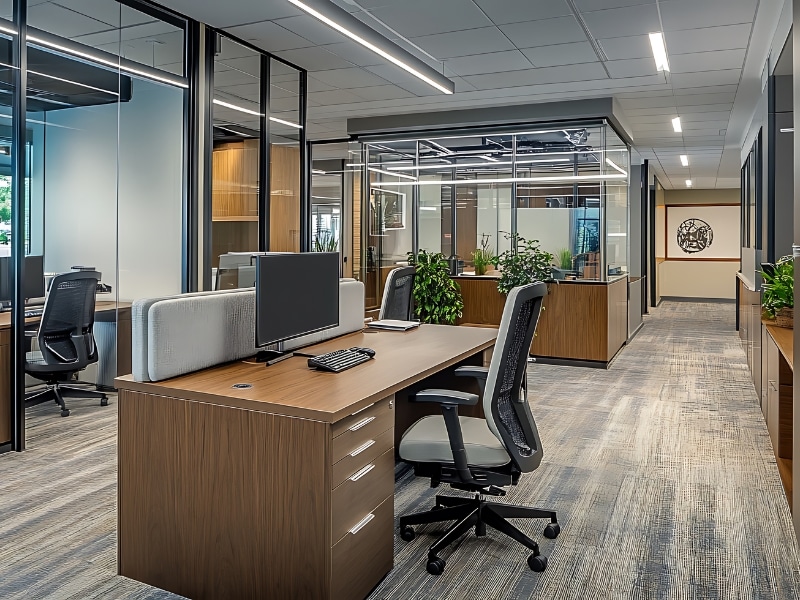
The modern workplace increasingly turns to the concept of glass partition design for office environments because it effectively addresses a range of persistent spatial and environmental problems. In many older offices, bulky and opaque dividers block natural light and create visual clutter, which hampers productivity and staff wellbeing. This article explores how minimalist glass partition design for office interiors offers a sophisticated solution by combining transparency, clean lines and sustainability, delivering an uplift in ambience and performance.
What challenges do offices face with outdated partition styles?
Outdated partition systems can negatively affect a workplace’s lighting, comfort, and adaptability. These traditional dividers often obstruct the natural flow of space and energy, creating less functional and aesthetically pleasing environments. Here are the problems outdated partitions tend to cause:
- Poor access to natural daylight and views undermines occupant comfort and may reduce creativity and concentration.
- A cluttered appearance arising from large solid walls which creates a sense of fragmentation and confines interaction among teams.
- Low energy efficiency from thick materials and limited heat or glare control, which raises HVAC loads and running costs.
- Maintenance burdens and inflexibility in adaptation when office requirements change, hindering future-proof design.
- The sense of being closed off in older partition systems, reducing transparency and the open feel modern workers expect.
As companies aim to modernise, many are shifting to modern glass office partition design that delivers both visual connectivity and operational flexibility without compromising the structure’s acoustic performance.
Why is minimalism transforming glass partition design for office spaces?
Minimalism is changing glass partition design for office spaces because it emphasises transparency, reduced hardware and cleaner aesthetics to deliver both visual appeal and functional performance. Here are the ways this transformation is happening:
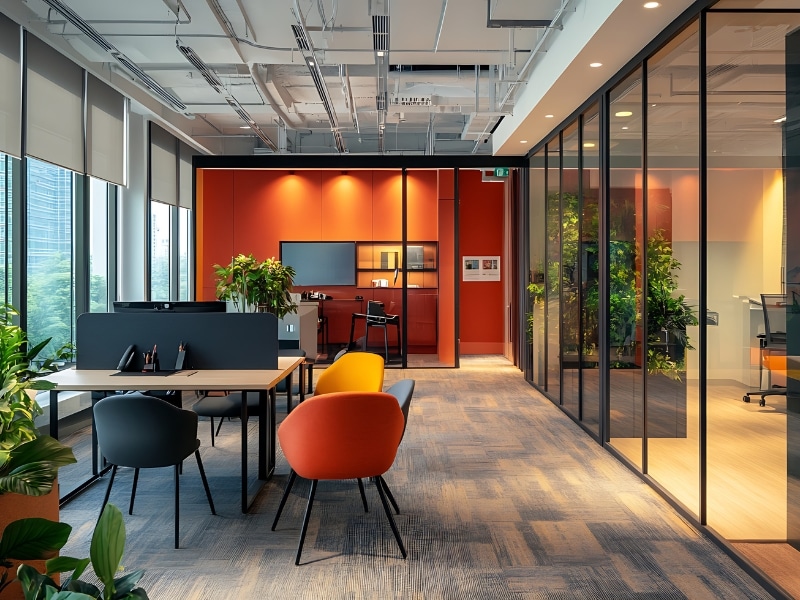
- Simplicity in frame profiles means the thin aluminium or steel frames nearly disappear, reinforcing the sense of openness across zones.
- Transparency becomes a feature rather than a drawback, allowing collaboration to flourish and daylight to permeate deep into the plan.
- Use of minimal materials and finishes reduces waste and supports sustainable interior thinking, aligning with eco-conscious design principles.
- The influence of biophilic design means glass walls incorporate views of nature, greenery and light without heavy structural interference.
- Minimal hardware and clear sight-lines create a refined aesthetic that supports brand image, staff satisfaction and modern workplace identity.
These benefits align closely with eco-conscious office glass solutions that elevate sustainability while refining spatial perception and enhancing occupant comfort.
How does sustainable glass design balance aesthetics and performance?
Sustainable glass design in office partitions balances aesthetics and performance by combining high-performance glazing with visual openness so that the space looks good and consumes less energy. Here are the factors to keep in mind:
- Integration of low-E coatings, solar control films and laminated glass improves insulation and reduces unwanted heat gain while still maintaining clarity.
- Recycled or recycled-content glass frames and panels reduce embodied carbon and support circular economy outcomes in building interiors.
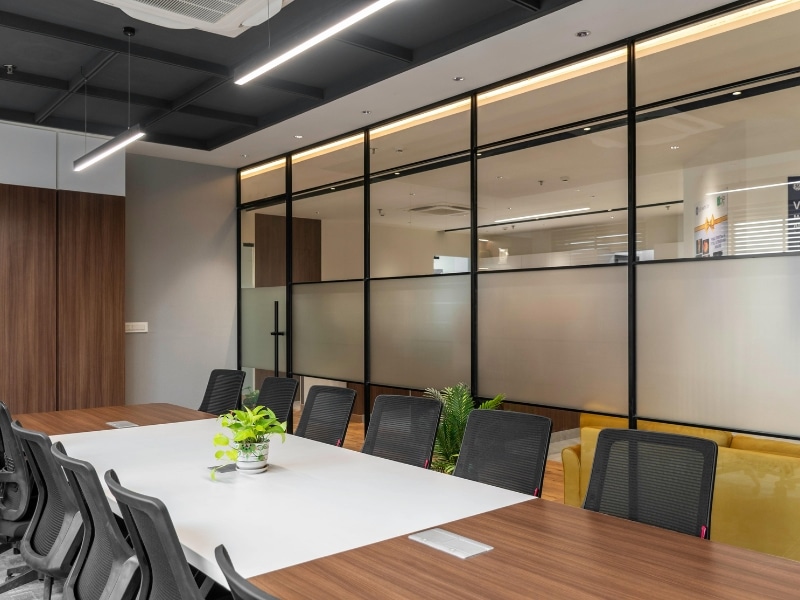
- Acoustic glazing solutions allow for sound control without turning walls into opaque barriers, preserving transparency and collaboration.
- Performance glass helps manage UV transmission, glare and thermal comfort while fitting with minimalistic aesthetics that keep spaces light and bright.
- Balancing visual openness and energy efficiency means office design can deliver both contemporary style and sustainable credentials.
| Performance characteristic | Traditional opaque wall | Minimalist glass partition with high-performance glazing |
| Daylight penetration | Low | High |
| Embodied carbon | Relatively high materials | Reduced with recycled/glass aluminium framing |
| Flexibility of layout | Limited | High, easy to adapt or relocate |
| Visual connectivity | Minimal | Significant, clear sight-lines |
| Energy efficiency | Lower efficiency | Enhanced with advanced glazing |
These points illustrate why designers increasingly draw inspiration from modern office partition ideas that put sustainability and aesthetics at the forefront of office upgrades.
Which materials make modern glass partition design more eco-friendly?
Eco-friendly office design relies on thoughtful material selection. When it comes to glass partitions, using recyclable and thermally efficient materials helps reduce energy demand and environmental impact long-term. Here are the material choices that support this goal:
- Recycled aluminium or steel framing for glass partitions significantly lowers material consumption compared with new extrusions.
- Laminated glass using post-consumer recycled glass content reduces embodied energy while retaining performance and clarity.
- Low-emissivity (low-E) glass or thermally broken units support insulation and help maintain comfortable interior temperatures without heavy structural insulation.
- Sustainable certification for materials helps office fit-outs satisfy environmental rating requirements.
- Modular glass partition systems designed for reuse or re-configuration promote long-term sustainability, reducing waste from demolition or replacement.
These choices reflect a commitment to materials that go beyond aesthetic appeal and contribute actively to green building targets.
How can transparent zoning enhance light flow and visual comfort?
Transparent zoning enhances light flow and visual comfort by using glass partitions to delineate spaces without obstructing daylight or creating visual barriers. Here are the benefits:
- Glass walls allow daylight to travel deep into the interior, reducing reliance on artificial lighting and fostering a more natural environment.
- Clear sight-lines maintain visual connection between teams and zones, contributing to a sense of openness and team cohesion.
- Transparent zoning maintains acoustic separation when required (with specialised glazing) while preserving the open aesthetic of the space.
- Visual comfort improves because glare, heat gain and reflections can be managed via tinted or laminated glass without sacrificing transparency.
- Use of greenery and biophilic elements behind or adjacent to glass partitions connects occupants with nature while retaining sleek lines and modern finishes.
This focus on visibility and comfort aligns with principles of energy-efficient workspace planning, helping designers optimise light distribution and reduce HVAC loads.
Final thoughts on balancing sustainability and elegance in office glass partitions
Ultimately, high-quality minimalist partition systems allow your workplace to achieve both aesthetic finesse and sustainable performance without compromise. Emphasising clear sight-lines, clean materials, and high-performance glazing ensures your interior reflects modern expectations. With carefully selected finishes and expert installation, you can draw on expert recommendations by Intrinsic Glass to carry out the execution smoothly and deliver a lasting impact.